The Real Reason You Don't Take Profits. It Has Nothing to Do With Greed.
You know the exit. You've known it for the last forty minutes. You're still watching the screen. The question is not about the trade anymore — it's about what happens to you when it closes.
The target is hit. Or close enough. Your system says exit. Your rules say exit. Some quiet, competent part of you says exit.
You don't exit.
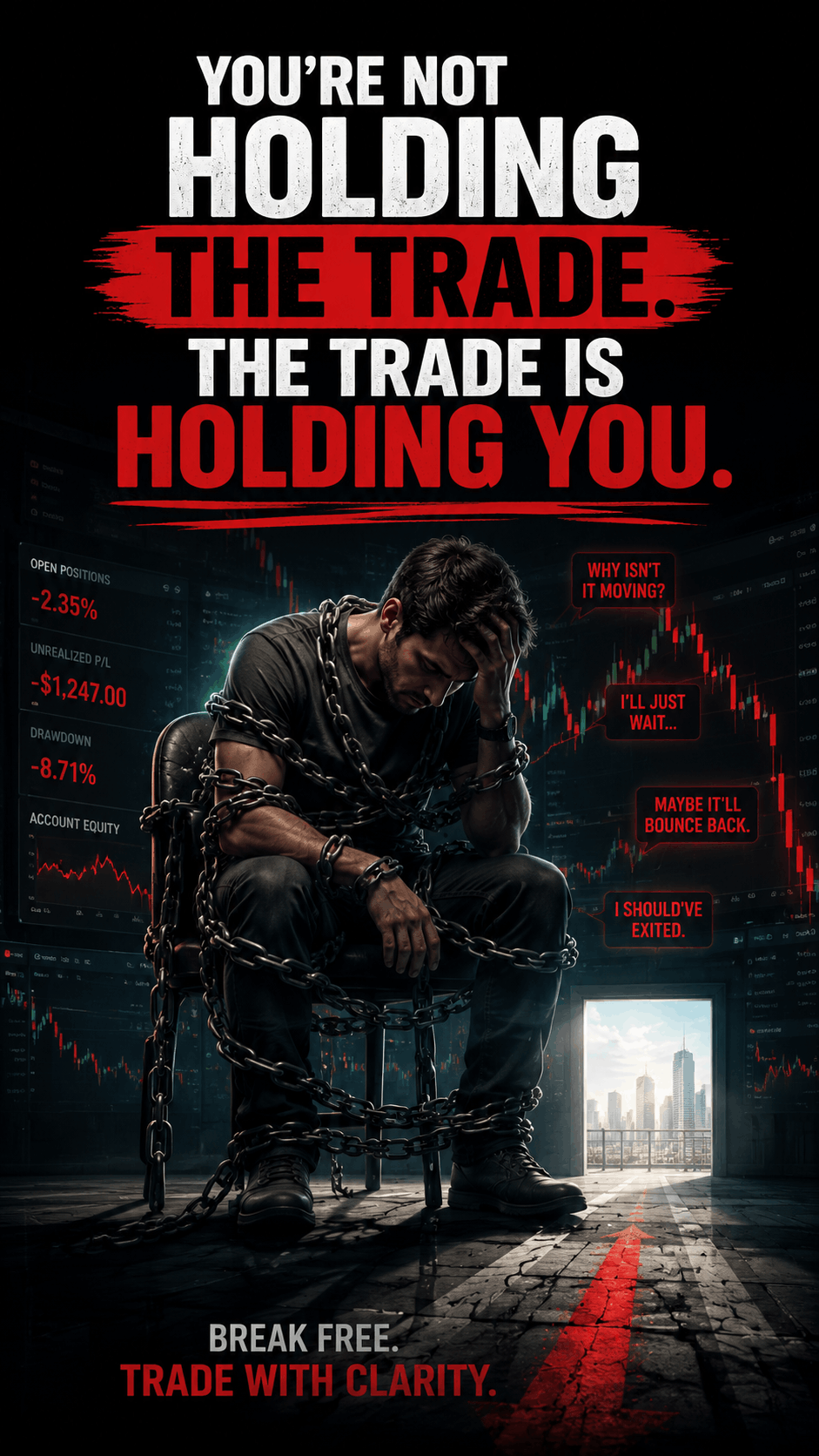
You tell yourself you're letting it run. You tell yourself the momentum is strong. You find one more reason to stay in — a candle formation, a news headline, a feeling. And then the market gives back half the profit, and you exit in frustration, having turned a clean win into a complicated story.
Later, you write in your journal: greed.
That is the wrong diagnosis. And as long as you keep using it, you will keep repeating the pattern — because you are treating a symptom while the actual cause sits untouched.
What the Open Trade Is Actually Doing
Think about what a live, winning trade gives you.
It gives you a reason to be at the screen. It gives you something to monitor, to manage, to think about. It gives your day a direction — will it or won't it, will I or won't I. While the trade is open, you are someone with a position, with a thesis, with skin in the game. You are a trader in the middle of a trade. That is an identity. That is a story with a question mark at the end.
The moment you close it — the story ends. The screen goes quiet. The question mark disappears.
And you are just a person, sitting alone, with a number in your account and nothing pulling at your attention.
For many traders, that silence is genuinely uncomfortable. Not because they are broken or weak — but because the open trade has been doing psychological work that has nothing to do with markets. It has been providing purpose, stimulation, a sense of consequence. It has been filling something.
Closing the trade doesn't just end the position. It ends the meaning the position was carrying.
The Profit-Taking Problem Is Existential
This has not been said clearly enough anywhere, so let it be said plainly here: the reason most traders hold winning positions too long is not financial. It is existential. The trade is a purpose substitute. And you cannot fix a purpose problem with a tighter exit rule.
You can set the most precise target in the world. You can draw the level, set the alert, tell yourself three times that you will honour it. And when the moment comes — when the price touches that level and the exit button is right there — something in you will hesitate. Not because the analysis changed. Because something in you does not want the silence that follows.
Greed is the story you tell yourself so you don't have to ask the harder question: what am I looking for in this trade that the trade was never designed to give me?
This is not a character flaw. It is a human pattern. An open trade is one of the most efficient generators of felt purpose available to a person sitting alone at a desk. The problem is that markets charge you for using them as a therapy session.
What Actually Fixes This
Not tighter rules alone. Not more discipline alone. Those help — but they are incomplete without this:
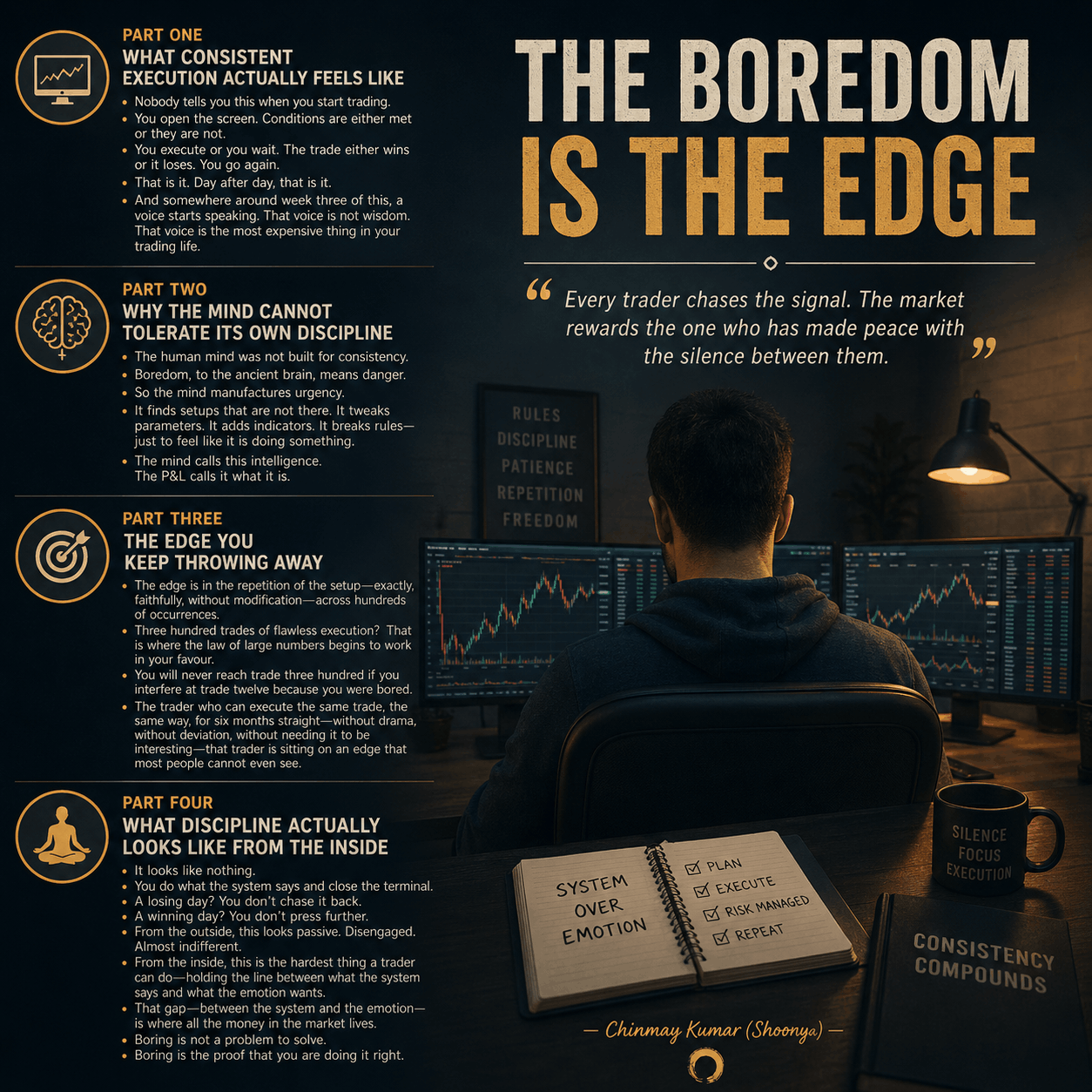
You need to know what you are doing when you are not trading. You need a life that does not hollow out the moment the screen goes quiet. Because a trader who has nothing waiting on the other side of a closed trade will find endless reasons to keep the trade open.
The exit problem is solved at the desk — but it is also solved away from it. In the quality of what you return to when the market closes. In whether your sense of purpose is borrowed from the position or built somewhere deeper.
The best traders exit cleanly not because they are indifferent to money — but because they are not looking to the trade for anything other than what the trade can actually deliver.
Check your positions right now. Not the price. Not the P&L.
Check what story you are getting from staying in.
That is where the real work begins.
— Chinmay Kumar (Shoonya)
The Real Reason You Don't Take Profits. It Has Nothing to Do With Greed.