You Have Two Brains When You Trade. Only One of Them Wants to Win.
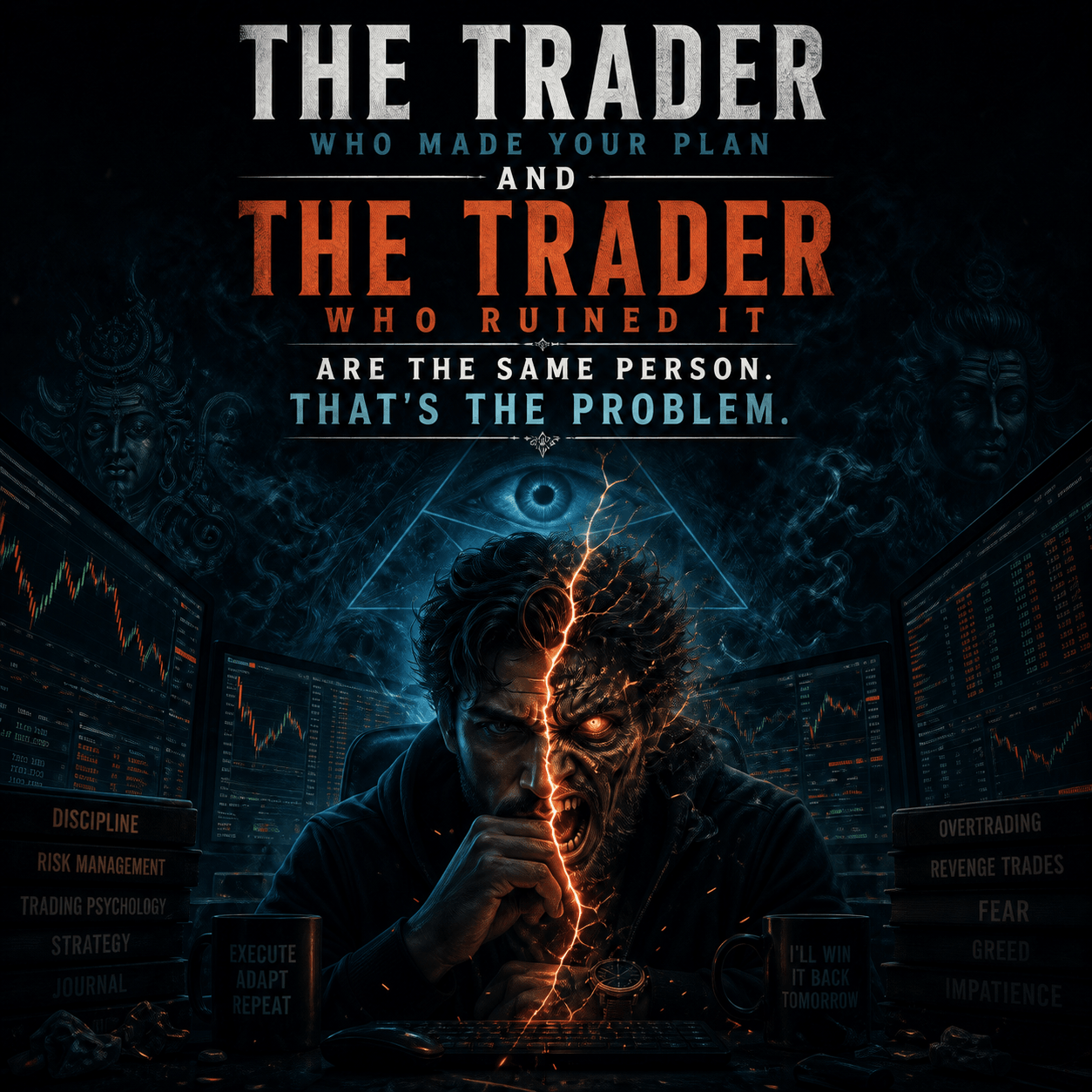
The person who planned the trade and the person sitting inside the trade are not the same human being. This is not philosophy. This is biology.
You spend the evening before doing everything right. You mark your levels. You define your entry, your stop, your target. You tell yourself — clearly, calmly — exactly what you will do and exactly what you will not do. You go to sleep feeling like a disciplined person.
Then the market opens.
The trade triggers. You're in. And somewhere between the moment the position is live and the moment it starts going against you — something happens. A different version of you shows up. One that was not part of the plan. One that has never respected a single rule you have ever made.
Most traders call this "letting emotions take over." That framing is too easy. It lets you off the hook too quickly. What is actually happening inside your body in that moment is not vague or poetic — it is documented, measurable, and specific.
The Biology Nobody Is Talking About
Research conducted on professional traders in London — published in the Proceedings of the National Academy of Sciences — found something that should permanently change how you think about your decision-making in a live trade. When traders were in winning streaks, their testosterone levels rose measurably. When volatility spiked and positions moved against them, cortisol — the stress hormone — flooded the system.
Here is what that means in practice.
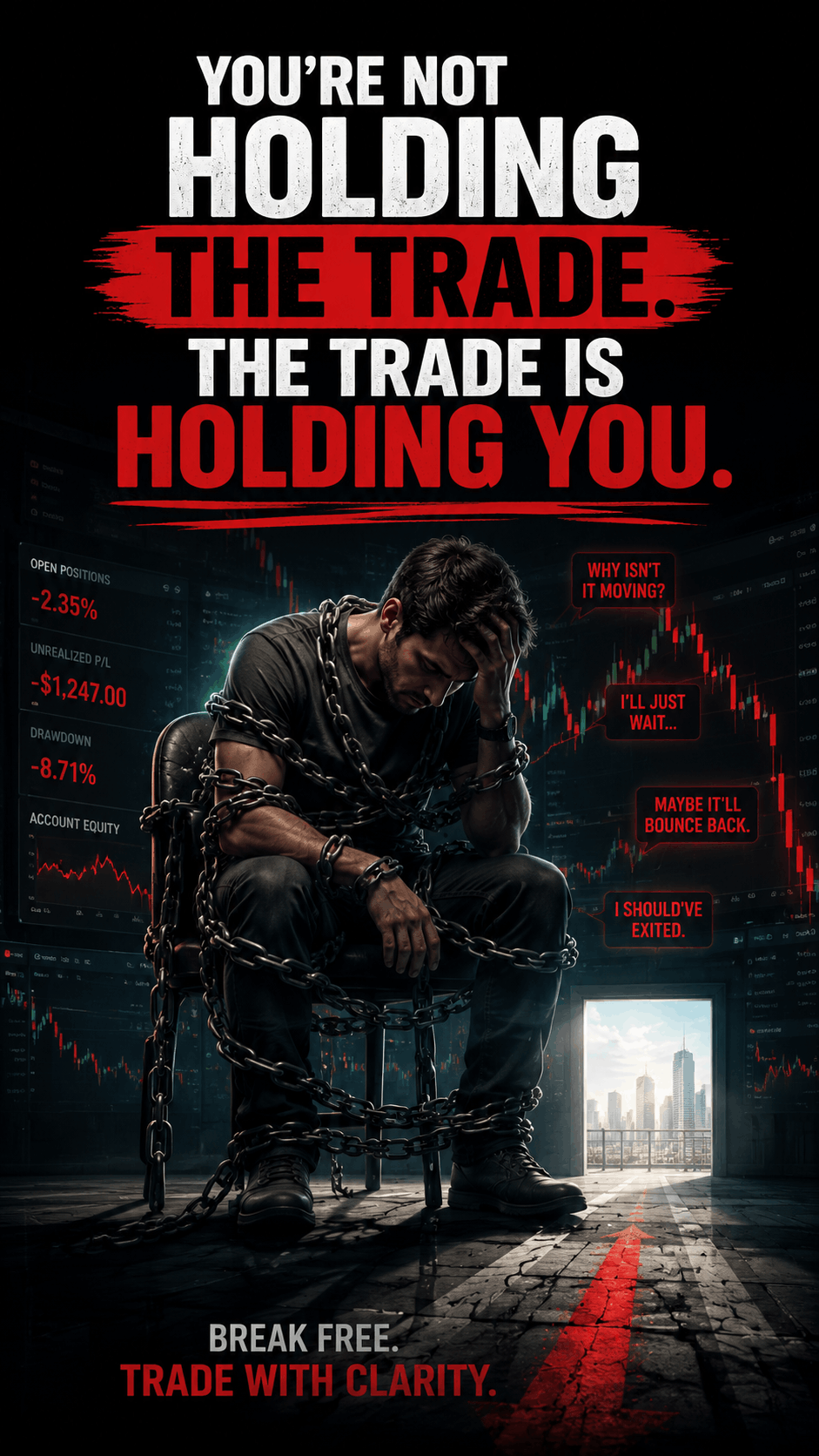
Elevated cortisol does not just make you feel anxious. It biochemically alters your risk perception. Under high cortisol, the brain begins to classify neutral information as threatening. A normal pullback starts to look like a reversal. A temporary drawdown starts to feel like catastrophe. Your stop, which looked completely rational last evening, now feels impossibly painful to execute.
You are not overriding your rules because you are weak. You are overriding them because a different brain is temporarily in charge.
The prefrontal cortex — responsible for rational decision-making, rule-following, long-term thinking — becomes less active under acute stress. The amygdala — the brain's threat-detection centre, wired for survival, not profit — takes over. The amygdala does not know what a stop-loss is. It only knows: danger, escape, survive.
This is the trader you don't know. The one who lives inside the very body you sit in every morning at 9:15.
What This Actually Means
Your edge is not just in your strategy. Your edge is in the gap between your planned self and your biological self — and how well you can manage that gap.
This is why system-based trading exists. Not because humans are stupid. Because humans are human. The algorithm does not have an amygdala. It does not produce cortisol. It executes — because execution is all it was built to do.
The most dangerous moment in any trade is not when the market moves against you. It is the three seconds after that — when your body registers the loss before your mind has processed it. Those three seconds have cost more traders more money than any bad strategy ever has.
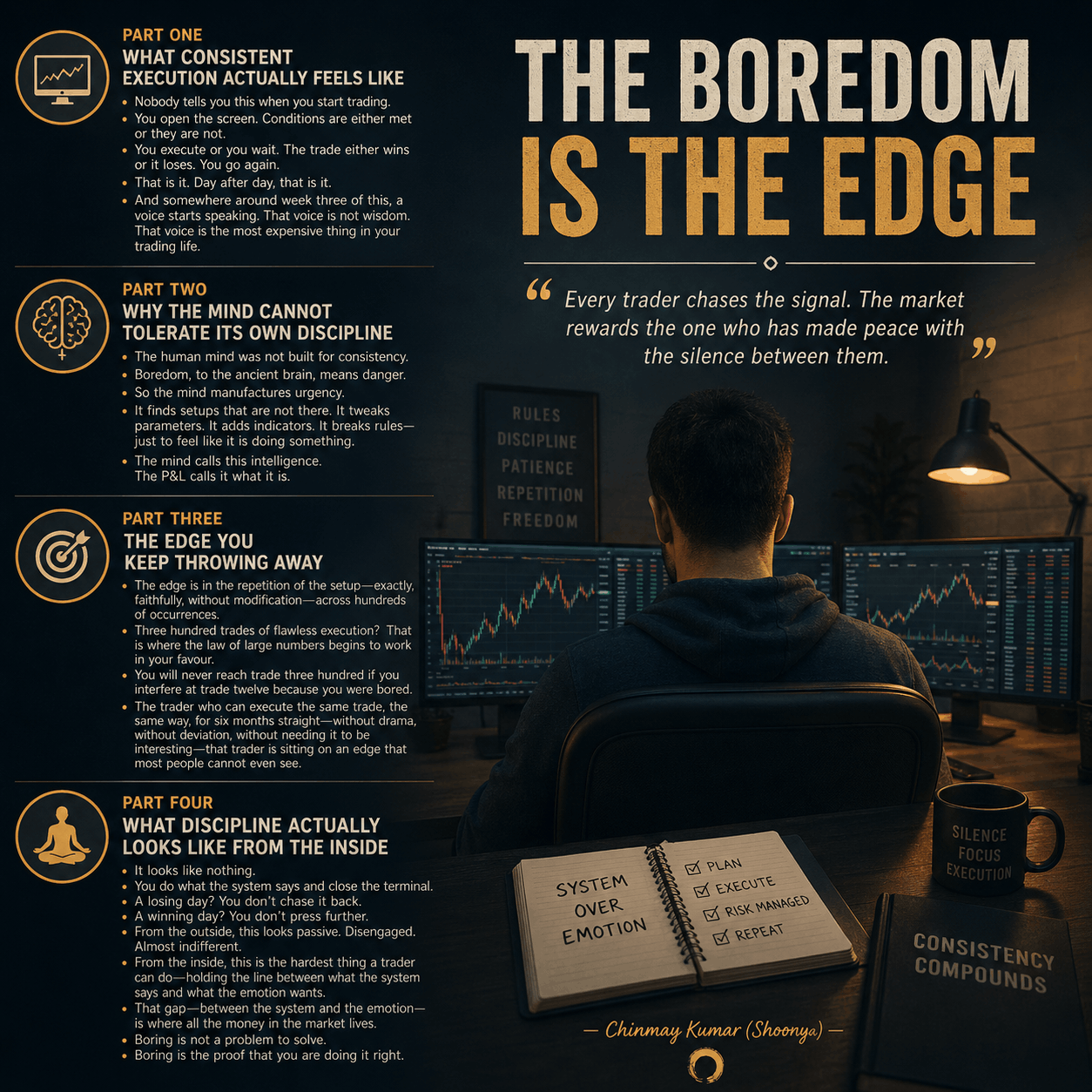
You cannot fight your own biology with willpower alone. You have to build a system that makes the decision before the biology arrives.
This series is not about motivation. It is not about mindset tips. It is about the trader you don't see in the mirror — the one made of hormones, survival circuits, and evolutionary wiring that was never designed for financial markets.
Seven parts. Seven things nobody is telling you.
We are just getting started.
— Chinmay Kumar (Shoonya)
You Have Two Brains When You Trade. Only One of Them Wants to Win.